
Leveraging AI Automated Trading to Overcome Cognitive Biases

Lukra.AI
Leveraging AI Automated Trading to Overcome Cognitive Biases
4:12
Discover how AI-powered automated trading platforms are redefining financial decision-making by eliminating emotional pitfalls and cognitive biases for smarter, more consistent results.
The Hidden Costs of Cognitive Bias in Trading
Cognitive biases are deeply ingrained patterns of thought that can subtly but powerfully distort a trader’s judgment. Among the most prevalent are confirmation bias (favoring data that supports existing beliefs), recency bias (overweighting recent events), loss aversion (fearing losses more than valuing gains), and FOMO—the fear of missing out. These mental shortcuts may have evolved for speed, but in financial markets, they often lead to irrational decisions.
For traders, the consequences of unchecked bias are significant: missed opportunities, premature exits, over-leveraged positions, and emotional trades that undermine long-term strategy. These behavioral traps drive inconsistent results and erode confidence, especially in volatile or fast-moving markets. Recognizing these hidden costs is the first step toward adopting smarter, more disciplined solutions.
How AI Automation Delivers Emotion-Free Execution
AI-powered trading systems, such as Lukra’s platform, are engineered to operate without the emotional triggers that compromise human decision-making. By relying on algorithmic execution and quantitative models, AI platforms execute trades solely on data-driven criteria, free from the anxiety or excitement that leads to impulsive actions.
This unemotional execution is especially critical when markets become turbulent. While human traders may panic or chase trends out of fear or greed, AI automation remains steadfast—executing instructions exactly as programmed, regardless of sentiment. This approach significantly reduces the impact of cognitive biases and ensures decisions are made based on logic, not emotion.
Institutional Logic Meets Adaptive Intelligence
Lukra’s AI combines institutional-grade logic with adaptive intelligence, enabling retail traders to benefit from strategies once reserved for professional desks. These systems are meticulously backtested and subject to rigorous statistical validation, ensuring every trade aligns with a robust, rule-based framework.
At the same time, adaptive learning allows the AI to evolve with new data, identifying shifts in market dynamics and updating models as conditions change. This combination of institutional discipline and machine learning flexibility provides consistent and repeatable performance, helping traders avoid the pitfalls of static or emotionally driven strategies.
Integrating AI Trading Solutions into Modern Fintech Stacks
Modern fintech stacks demand seamless integration, data security, and scalable automation. Lukra’s AI trading solution is designed for compatibility with leading CRM systems, marketing automation platforms, and analytics tools—enabling organizations to centralize trading intelligence alongside other core business functions.
Comprehensive APIs and secure data pipelines allow for real-time synchronization of trading activity, performance insights, and risk controls. This unified approach not only streamlines operations but also ensures compliance with data privacy and security standards critical to today’s fintech environment.
Transforming Performance Tracking with Advanced Analytics
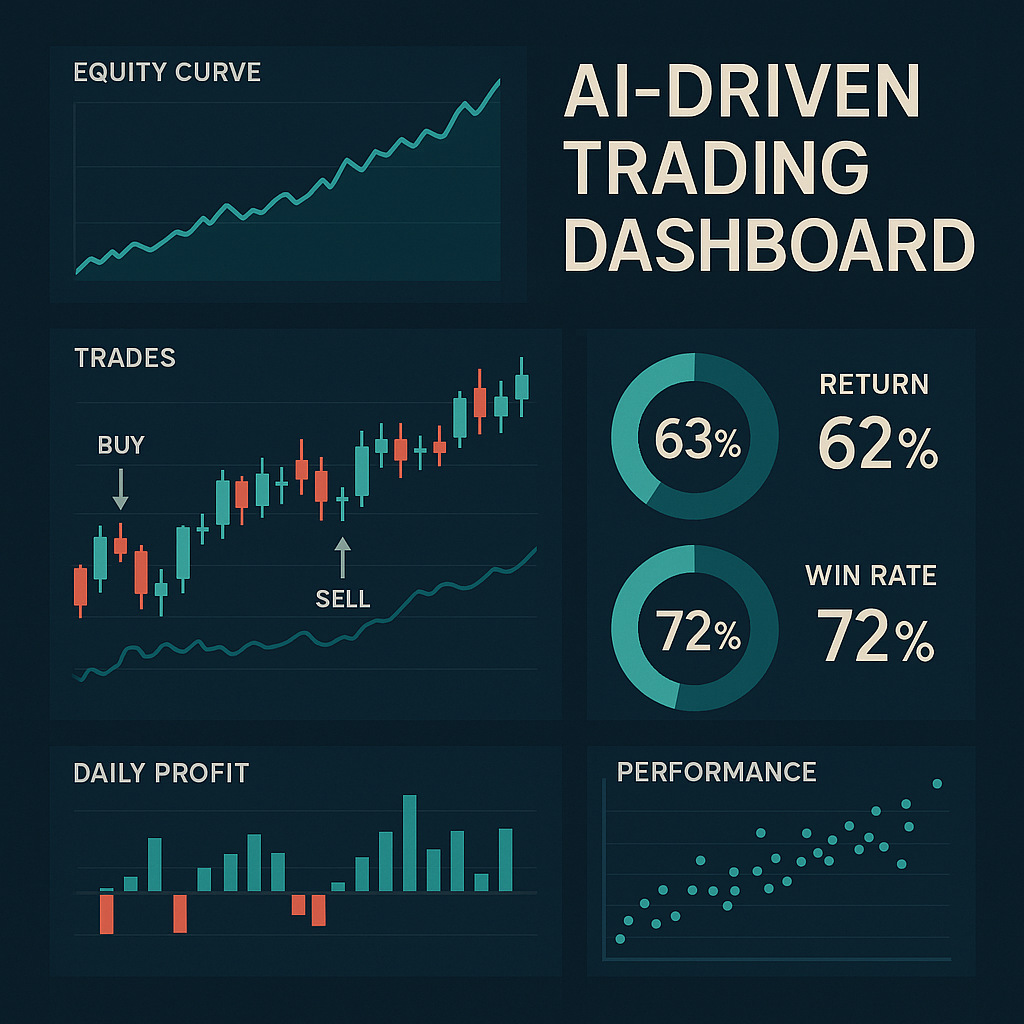
Advanced analytics are at the heart of Lukra’s value proposition. By delivering transparent, real-time performance data and granular tracking of strategy outcomes, the platform empowers users to evaluate decisions objectively—free from hindsight bias or selective memory.
Customizable dashboards and detailed reporting tools allow traders and RevOps teams to assess KPIs, measure risk-adjusted returns, and refine strategies based on empirical evidence. This level of insight, combined with AI-driven discipline, gives organizations a sustainable edge—demonstrating why the best long-term results come from pairing human insight with the consistency of automated systems.
